Friday, March 18, 2016

We're the Saudi Arabia of Copyright

American copyright law protects images that are as old as this mouse, for no discernible reason.

"Do not weep; do not wax indignant. Understand." – Baruch Spinoza

The key problem with policy work in this area has been that the underlying behavior of cyber technology is very weird. When you try to understand Quantum Physics, for example, you run into the massive problem that electrons and photons don't act at all like anything you can see in the real world. A "Wave-Particle" that is a little package of probability is not like a ball or a wave or really anything. The same thing is true in cyber norms. What we think of as two different things turn out to be the same thing a lot of the time.

For example, censorship and copyright are linked as closely as electrons and photons, as is security monitoring and surveillance. Efforts to outlaw one using technology immediately run into problems because there is not technical difference between them. As Ann Ganzer learned this year, the same is true with penetration testing and "intrusion software".

In other words: If you think Saudi Arabia's desire to protect their Creator from being insulted, and America's desire to protect "content creators" from being "stolen from" are any different, you are going to be disappointed with how the Internet works. I can't tell you how many times I've been in a very high level policy meeting and heard from otherwise intelligent people "Why can't we have a driver's license for using the Internet?"

A different America would take a strong and principled stand against censorship in general. But we can't. We are the Saudi Arabia of copyright. More than any other nation we rely on what is essentially a global regime of censorship, full of legal and technological tools, to make our economy run. And it produces an obvious blind-spot in our policy work to the objective viewer. It is no accident that as Secretary Clinton was giving speeches about Internet Freedom, she was also fighting as hard as possible to wipe Wikileaks off the Internet with the law.

Corporations (Google/MS/Apple in particular) have not missed this obvious facet to our policy work. They can see that the United States Government and the Chinese Government are directly aligned against them on this (and many similar) issues. To illustrate it, a segment from the book released yesterday by Nato on cyber norms (page 106) is below:

President Xi engaged with a different conception of freedom to that used by Neelie Kroes. He linked freedom to order by saying that ‘order is the guarantee of freedom’ and therefore, it is necessary to respect sovereign law in cyberspace ‘as it will help protect the legitimate rights and interests of all internet users’.58 In a similar effort to justify exercising domestic law (and thereby infringing the norm of de-territorialised data), US Senator Patrick Leahy made the following comments when introducing a bill designed to prevent ‘foreign-owned and operated’ websites from facilitating intellectual property theft: ‘We cannot excuse the behaviour because it happens online and the owners operate overseas. The Internet needs to be free – not lawless’.

And when I last talked to a Nation State policy-maker (not US), censorship was first on the  list of things they wanted to enable on their national infrastructure. "How do we block ISIS from Forums, Twitter posts, etc.?" is a hugely desired ticket item. But what that ticket item requires is more expensive, both in money and Freedom, than any country can afford.


Monday, March 14, 2016

Cyber Norms: The futility of blacklisting critical infrastructure

First I want to quote from an email here: """
Cyber security policy is not a greenfield space!

I did post these to regs@ in December and am guessing you still have not read them. Of interest : Section III, ‘Norms rules, and principles for the responsible behaviour of States’.[1] China and Russia in fact co-authored a Code of Conduct in support of the larger report.[2]
________
[1] pp. 6-7, http://www.un.org/ga/search/view_doc.asp?symbol=A/70/174
[2] pp. 4-6, http://www.un.org/ga/search/view_doc.asp?symbol=A/69/723
"""

If you read those two papers you will see the UN doing their usual "let's all be friends" in cyber ranting about how great it would be if all States avoided conflict on any level. There are a few recurring themes in cyber policy work at this level:

  • Please don't hack critical infrastructure
  • Please control hacking from your own territory, for the love of all that is holy
  • Please censor SOME stuff, which we can all agree on (?) but not TOO much stuff (because of human rights)
  • "Confidence building is important" (but only between Nation States, not with companies or communities)

The next set of blogposts here will discuss all four of these issues, starting with critical infrastructure, and how our previous efforts in the area are doomed to failure and why.


To be fair, previous cyber norms policy worked at some level. We have a LOT of cooperation between States when it comes to criminal prosecutions and gangs (Eastern Europe and Russia in surprising particular). We do have people to call in Russia who will tell us that the JPMorgan hack "was not them", even if it takes several months. The law enforcement side of cyber norms is far far ahead of the war and intelligence side.

Critical Infrastructure


That seal is a NY Dam waiting to happen.


First of all if you've done 15 years of scoping penetration tests or hacking Nation States, you know the idea of blacklisting "critical infrastructure" is bullshit.

A simple truth about the cyber domain: My goal is not to hack your critical infrastructure. My goal is to figure out which infrastructure on your network is critical that you didn't think was critical, and hack that. The stuff you already knew was critical is protected by the NSA. The stuff you didn't think was critical is defended by Symantec or Microsoft Defender. 

Likewise, much as there is no difference technically between penetration testing software and hacking software, there is no difference technically between allowable pre-positioning and intelligence gathering and "trespassing" on critical infrastructure systems.

One idea they have not tried of course, is the idea of placing signed tokens on machines which they feel are too sensitive to have Iranian implants on them because they would offer the chance of critical failure. Then in theory, an Iranian hacker could check for those signatures before putting the rootkit on the box, right?

Going through that mental exercise demonstrates the difficulty of the goal of blacklisting critical infrastructure. Networks are fully connected things by their very nature. And the data layer is even more connected than the network layer.

And that will let us segue in to "Controlling your own territory from the cyber norms perspective", which will be tomorrow's policy blogpost. :)


Friday, March 11, 2016

The CFR 0day Meeting

The San Francisco Style...


Adam Segal and Michael Levy held a Council on Foreign Relations workshop on "Confronting the Zero-Day cyber-security challenge" last week in San Francisco while RSA was on. CFR is a pretty big deal, for those of you who don't spin in the Government policy circles.

I was not attending RSA, but I flew in the for the meeting to attend. The meeting also had a lot of the usual faces from Industry and Government that you would see at the NTIA meetings or the Wassenaar meetings. It's a giant traveling information security policy circus - but largely because everyone is afraid of a Wassenaar-level fuckup. The Shadow of that policy mess hung over this meeting like a breath of hot, smoggy DC air.

In any case, I attend the policy meetings so you don't have to!

Let me give you the summary of the conclusions: The conclusion was there is no way to have a stance on 0days from a diplomatic standpoint - that software liability is a hard option - that we don't have any of the numbers or metrics or data that we would need to make informed policy decisions in this area and we are not even sure HOW or WHERE to get these numbers and what those numbers would measure exactly.

That's not my conclusion, that was basically the conclusion of the group as a whole. It is a much more honest opinion than the CFR wanted, as far as I can tell.

There was one question which I wanted to address again though. And it was this:

Q: Some parts of what you did at the NSA were classified, but let's say you worked on a 0day, how do you know what parts of that were classified? Is the bug class classified? What level of abstraction is actually the secret part? What do you have to get pre-publication reviewed? Anything in exploitation? Anything in Windows exploitation? Anything just on that particular service? Anything that is exactly that bug?

A: We all just use our judgement on that. 

That's not the answer I gave at the time, but it was a much better question than I realized in the haze of jet-lag. I get this question over and over again - "How do you define 0day?". "Surely there is some clear, industry accepted, clear as day idea of what a "vulnerability" is?", the uber-powerful lawyer asked me just yesterday.

But there ISN'T. The only thing anyone knows about 0days is that like porn, they know it when they don't see it. The question this person asked about classification was quite subtly probing the root of that problem.


I'll be honest, I don't recommend the book. I read the whole thing on the plane and like all recent "cyber war history" books it is good if you've never heard of the subject before and need to learn about it, but all the details are at the wrong resolution because nobody who was really involved will actually talk who is not already retired. Also, what author DOES NOT KNOW ABOUT FIGHT CLUB?


The All Seeing Eye

Sauron, where did I leave my phone?
So as today's annoyingly hypothetical question let me ask you this: If Google or Apple wanted to disclose our intelligence efforts in China, say, how much damage do you think they could do?

Is the next @Snowden truly someone who works in the intelligence community, or are they someone with access to enough data and computation that they can do massive damage without ever having "clearance"?

Look, all I'm saying is that there are a LOT of reasons for the US IC not to go to war with the only companies on Earth that have a working AI.

Tuesday, March 8, 2016

A technical scheme for "watermarking" intrusions

A Sample Scenario

A commercial security company finds a trojan on one of the servers used by Turkey Point Nuclear Generating Station. While none of the management machinery is compromised (and in fact, is not even computerized), the server is responsible for both holding sensitive information and conducting other sensitive operations and an analysis by a point team deployed from a National Lab indicates that had those operations been compromised, there was a possibility of power loss from Turkey Point, although not a nuclear release.

What our policy-makers do in this event is often dictated by whether they know, for a fact, that the trojan was placed there by a participating nation state following acceptable norms, or if it is potentially the work of a rogue nation or criminal group. Sometimes these situations will matter in the future to the point of "evacuate large cities" versus "clean up and forget about it". Our technical and political protocols as represented in this post are a first-draft attempt to provide an initial, reasonable step, towards a solution.

Some other solutions

One major other idea people want to implement is of course "no go zones" for intrusion. This is harder than it looks. Most important systems are dual use - collecting intelligence about a power plant is indistinguishable from being in a position to DoS it. So we back down to having the norm of "taking all due care" when on a sensitive system. This is nearly impossible to audit or manage. So for this and other reasons not stated here, we recommend instead that a system of "anonymous Red Phones" be set up.

The Value of Multilateral as Opposed to Bilateral Norms

Assuming you have a perfect way to do the watermarking as described below, if you only have two members of the Norms Group, detecting the watermark provides attribution. Therefore having many members in the norms group is ideal.

Likewise, a group-level anonymous "red phone" can allow for back and forth over a contested issue without running into the attribution issue.


Real World Use Cases


This "international incident" related to the war in Ukraine was in fact, nothing of the sort.


A basic background in watermarking


Every watermarking specialist has spent hours looking at this image and can't even see it anymore, just patterns of high and low frequency data.

Steganography and Watermarking are very similar, but watermarking has one clear major difference, especially when used, as most people want to, to fingerprint movie files or images so you can tell which customer you sent them to.

This is the normal conceptual format for watermarking, which is how visually inspectable watermarks work. This works fine as the smart people at BangBus know very well.


But customers hate seeing watermarks all over the place and of course, visual watermarks are subject to tampering and removal using that advanced "crop" tool in Windows Paint (or more sophisticated techniques I won't go into). So what super smart PhD people do is an invisible watermark, using this basic format:


And lots of people do really good mathematical work making watermarks (all of which boils down to hiding information in the hair and feathers of Lena). After several pages of math doing statistical modeling, you can add your watermark to compressed data and remain still basically invisible to the human eye, while still being recoverable after display or just from the compressed data stream itself. You'll note that all schemes like this avoid using EXIF or other tag data parts of the image format because you can't get a PhD by doing the obvious solution. However they have one simple problem, which is they all fail in the exact same way:


This is just how information theory works, and no amount of PhDing can solve it, in my opinion (and hopefully in yours). For this reason, invisible watermarks historically only work when the world does not know you are doing them. We are not so lucky in our goals (dire music goes here).

What are our design goals and constraints

One key thing is that we don't need to watermark software in particular, but intrusions in general. And intrusions are large complex things. Some of them involve exploits, some involve software implants ("Trojans") and some involve hardware implants. Many involve all three and each of those three components has many sub-components all of which we are expecting the skilled intrusion detection team to have access to when they conduct their analysis - but not necessarily immediately.

Significant intrusions get analyzed by teams of experts when they are discovered. But of course, signs of intrusions are being looked for by automated systems all the time. Our goal is to create a system that is detectable by a team of experts, but not by an automated system. An extremely robust system will be detectable just from an incident response report, without any access to the raw intrusion data at all, which has some political advantages.

Our particular technical options

The simplest way to indicate that we are a "nation-state" and not a "criminal group" is to share a private key and cryptographically sign a random data blob within as many sections of your intrusion chain as possible. The more places you sign, the more likely you are to be "validatable" by the Nation State Incident Response team (which also has the private key).

Of course, to "hide" this from automated detection techniques, you could make both the Blob and the signature something computed by code that, in some cases, is never even run during normal use.

Encryption routines are common inside implants. Likewise, most implants gather data from the machines they are installed on, for use as a key to encryption routines. This is valuable to them because it makes incident response harder (even INNUENDO does this). This is valuable to us because it means that a signature cannot be stolen from one trojan, and added to another trojan on a different machine.

Imagine an even tinier protocol, where you simply decide on a large set of 32-bit numbers, and if you see any three of them inside the analysis of your trojan, it is part of the Group. There is plenty of cover data to hide these numbers in. They could be register values computed during an initialization operation, for example. Or even text included within the program as a "forgotten debug variable". This kind of protocol would be more vulnerable to a theoretical "automated detection", but is more resistant to other kinds of analysis (no way to steal a signature if you can't figure out what part of the code is the signature). Likewise, this scheme operates without needing additional information from the host systems. Another benefit to this kind of scheme is that it is applicable to "data in motion" as well as data at rest (aka, Exploits).

The end result may be a multi-layered scheme, with each layer operating at a different level of confidence and security.

In the end you get a "uniform" for your intrusion efforts, but one that has camouflage and is not transferable to criminal groups.

Social Protocol Design


In addition to a technical design, we also need to decide when and how things such as keys will be distributed, what does a revocation look like, what does a "challenge" look like in case you think someone is overstepping the acceptable norms, or failing to sign their work, etc. I will leave all thoughts of this to another paper as it largely depends on having a working technical solution first. But this protocol will initially offer at least the possibility of an anonymous group "Red Phone" to avoid crisis when we need it most. A worthy goal?


Monday, March 7, 2016

The Cyber Domain is Different - Part 2

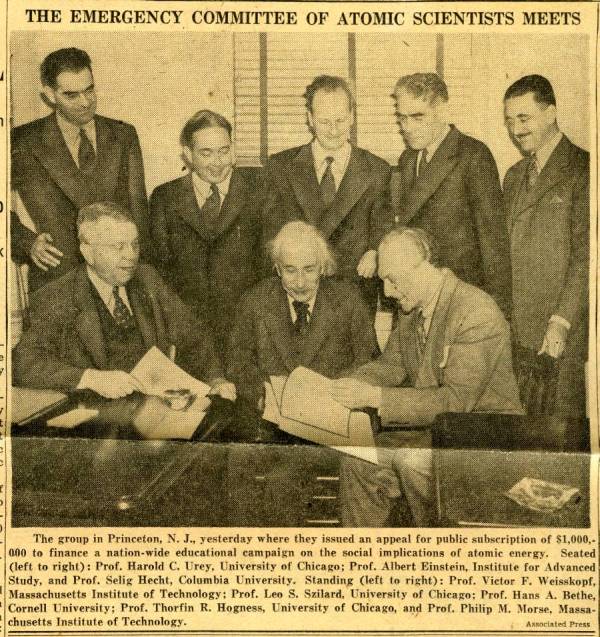
One major difference between cyber, and how we handle Nuclear/Chem/Bio is in the origin. If you are a self-defined "policy person" it might be wise to ask yourself how the below group of people, all of them PhD's essential in the beginnings of Nuclear efforts, differed from the people that you know are smart about strategy in the cyber domain:

If you gathered the people essential to building a cyber war doctrine for the US, none of them would have PhDs or teaching positions at Universities. A pretty big difference!

This is a difference extremely under-rated in Government policy circles, as I've seen first hand.


Tuesday, March 1, 2016

How are 90's hackers relevant to policy people, anyways?

TL;DR: All those 90's hackers have built things that warp the Internet in strategically interesting ways.


I had a comment from one of the policy experts who reads this blog. She asked "That was interesting, but how is that relevant to policy people?"

That's a good question! One quick answer to that is that analyzing the "birth" of cyber is a good way to understand why Cyber is not the same as Nuclear/Bio/Chem when it comes to regulation.

The first thing I want to help policy-peeps understand is that a cyber weapon is anything that changes the terrain of cyberspace.


  • This can be by allowing you to offer information without it being blocked by your adversary: think Wikileaks, Pirate Bay, or Tor Servers 
  • It can also be something that allows you to access confidential information (think NSA's QUANTUM)
  • Or it can be something that offers situational awareness (like Shodan or a rack-mount of Qualys servers with a team of people that really know how to use it)
  • Or a program that offers a hardware implant for every router on the market


But in general, real "Cyber Weapons" are very large programs - staffed by ten people minimum each. And they change the fundamental way the network works, as opposed to having a list of features like a commercial product.

And every one of those groups from the 90's knows that and has been in places where they have built them and many of those people continue to build them to this day. This is one of the differences between, say, Nuclear and Cyber. Whereas Nuclear was largely started in one place, Cyber started all over the world at about the same time. Remember that it took a letter from Einstein himself to start the Manhattan program, because only he understood the ramifications of the theories, and had the political push to make it happen.

But it is not a mistake that ten years ago there was a huge exodus of offensive talent from the intelligence community to Microsoft and Google and now they are at the forefront of the strategic war. It is not a mistake that the people involved in those 90's hacker groups have a different understanding of the possibilities of cyber.

And so WhatApp has strong end-to-end crypto, Napster offered files that were hard to remove from the net, and Wikileaks and Pirate Bay still exist even after massive US Government attempts to blot them from the Internet. What do you think the members of "Hacked By Owls" did after they were done defacing things? Lots.

I could go on, but think as a policy person to yourself: How would the world be different from a policy perspective if every major country on Earth had nuclear technology at first, instead of just the US? Too often the policy world asks itself "How is Cyber similar to Nuclear Weapons?" instead of asking how they are different.

And if you see something in the news that changes the Internet, anything really, ask yourself where it came from. Chances are one of those 90's hackers teams is behind it.